NOVO Engineering
-

Client
NOVO Engineering
-

Industry
Medical
-

Capabilities
STEP 3D Printing

8 Weeks Concept to Prototype

Successful Simulation of Injection Molding
STEP Enabled Bridge Production
STEP Enables Medical Engineering Firm to Accelerate NPI
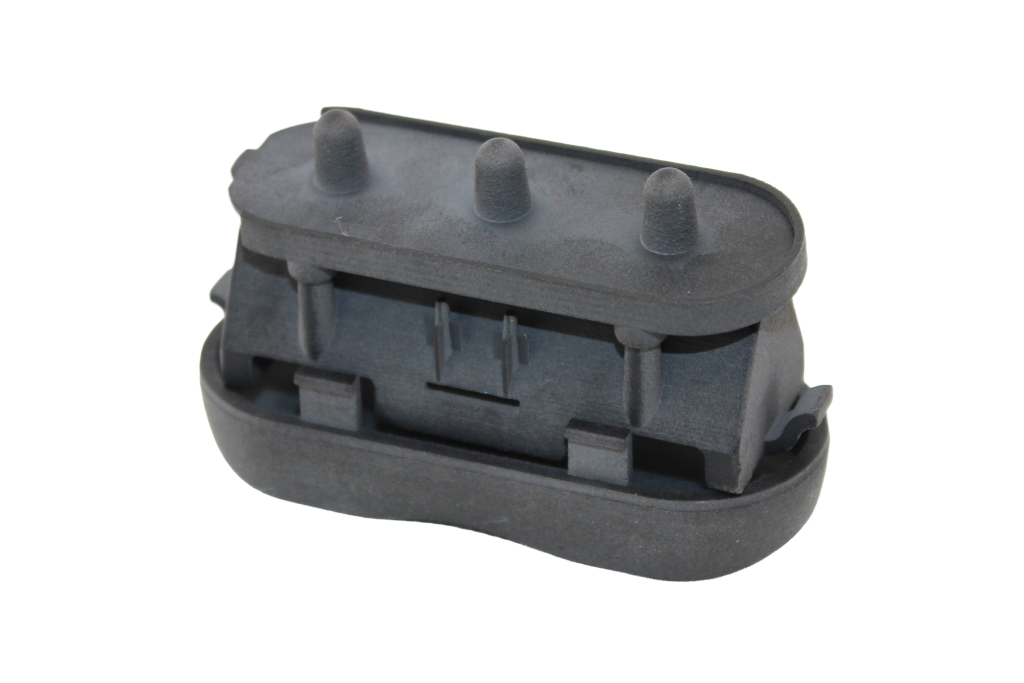
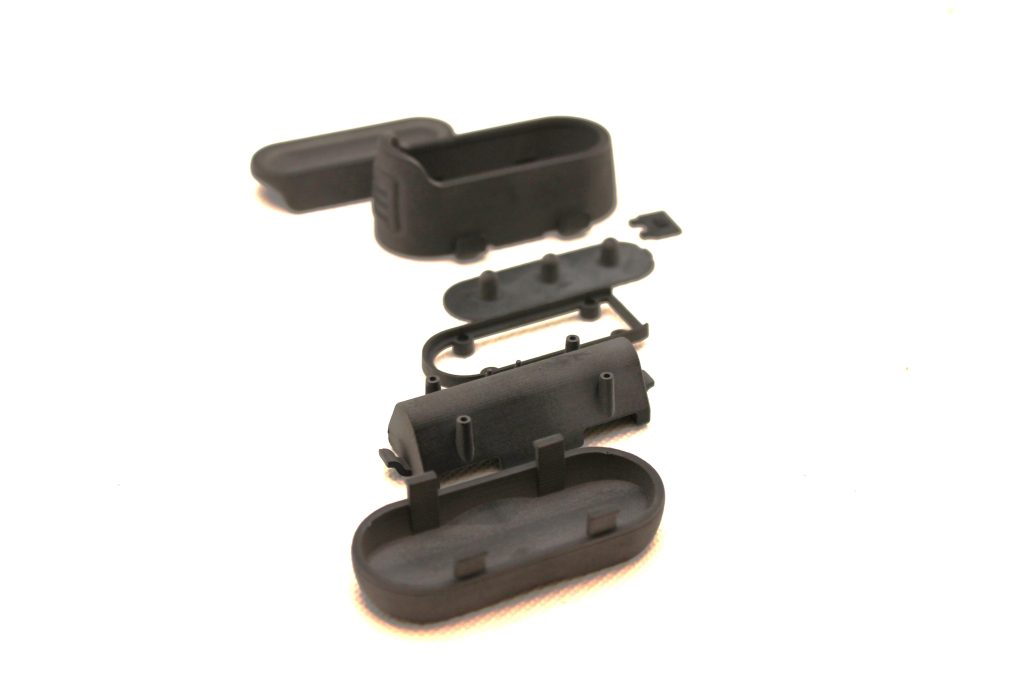
NOVO Engineering and its medical device customer faced a high-stakes design challenge. The goal was to quickly develop a small, high-precision plastic component: a key part of an inserter mechanism for a skin-mounted insulin delivery device. The catch? It had to mimic injection-molded performance, meet tight tolerances and hit aggressive budget and timeline targets, all without compromise.

The Problem
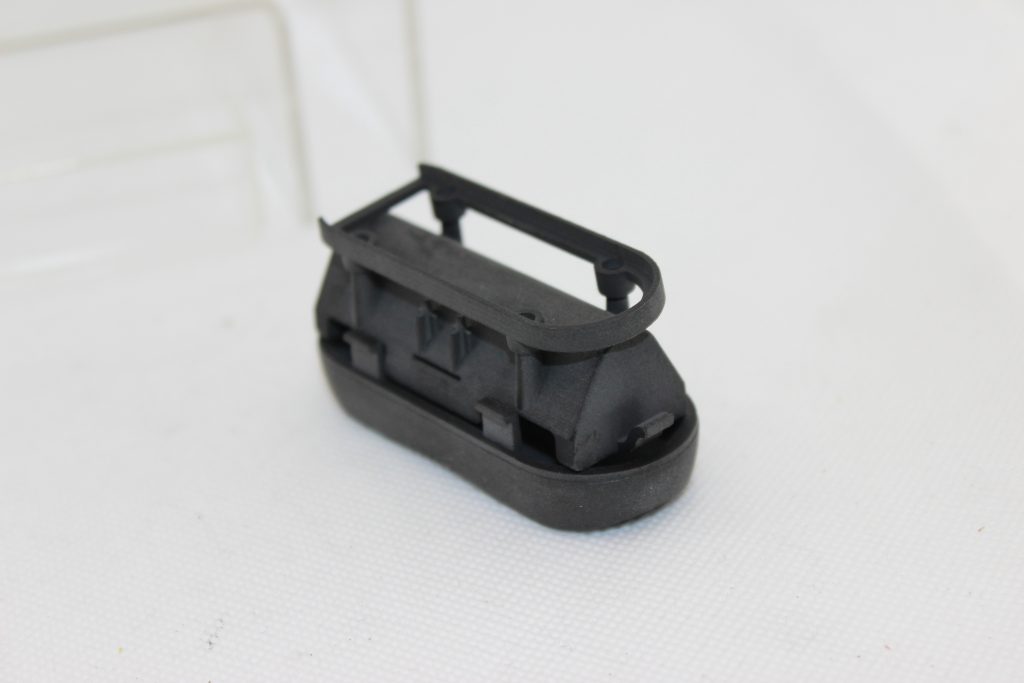
The inserter is a small, injection-molded assembly with moving parts: a flexible arm and sliding mechanisms.
-
Fit and dynamic friction were critical for a proper user experience. If the flex arms didn’t work smoothly, users might not be able to remove the inserter from their skin.
-
The entire mechanism was roughly ¾ in. in diameter. It also had detailed features and required tight tolerances.
-
An additive process such as FDM or object-style printing would have required manual modification, such as filing or sanding, which wasn’t feasible due to time and cost.
-
The material for the prototype arm had to closely mimic the ABS plastic used in production of the larger mechanism.

The Solution
NOVO selected STEP because it addressed each of their main concerns. First, it delivered the tight tolerances NOVO and its customer required for moving parts, flex arms and mating features. Second, it matched the mechanical properties of injection-molded ABS parts. Third, STEP made it possible to have parts delivered within one week. Finally, it enabled small-batch testing without expensive tooling.

The Result
-
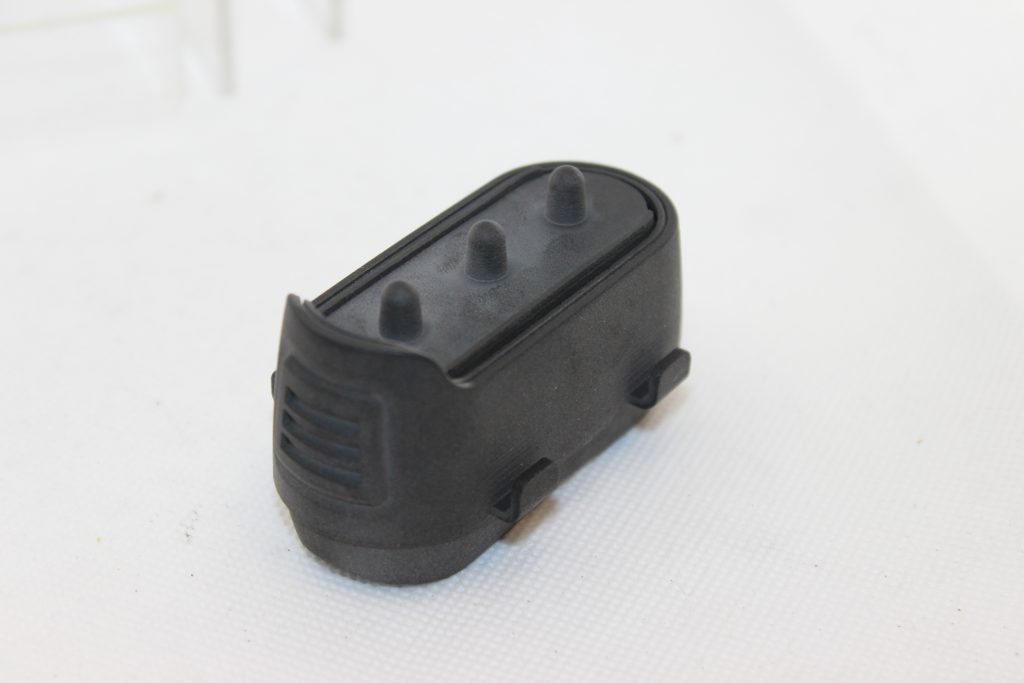
STEP delivered a workable prototype the first time. No further iterations were required.
-
It enabled a rapid, eight-week development sprint from design to test-ready prototype.
-
STEP outperformed FDM and other 3D methods in both cost and fidelity. Even tiny features came out clean and functional.
-
Thanks to its ability to print multiple parts in a single build, Fathom was able to deliver a sufficient quantity of inserter parts for hands-on evaluation and user testing.
-
NOVO engineers declared simulation of injection molded parts using STEP technology was a success.
8 Weeks Concept to Prototype
Successful Simulation of Injection Molding