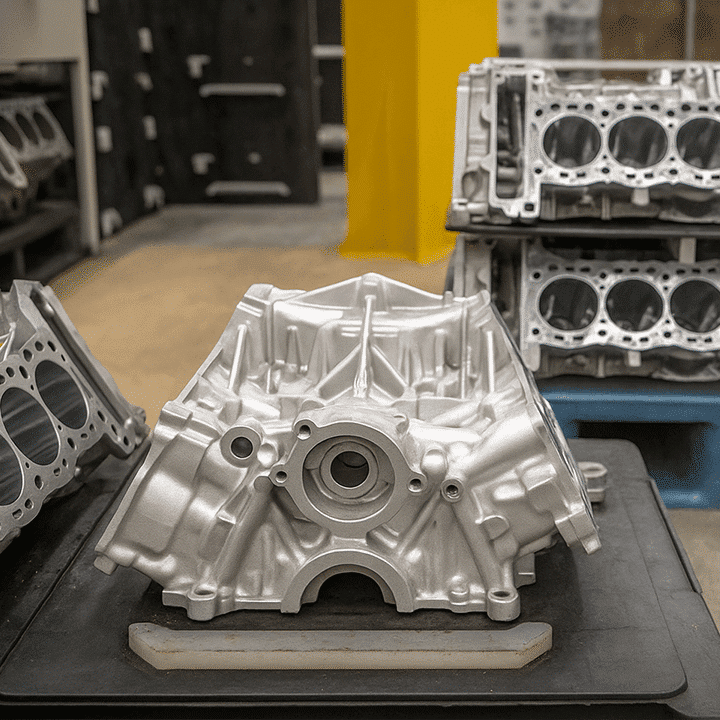
Low-Pressure Die Casting (LPDC)
Get a Quote
Trusted by Industry Leaders


How Does Low-Pressure Die Casting Work?
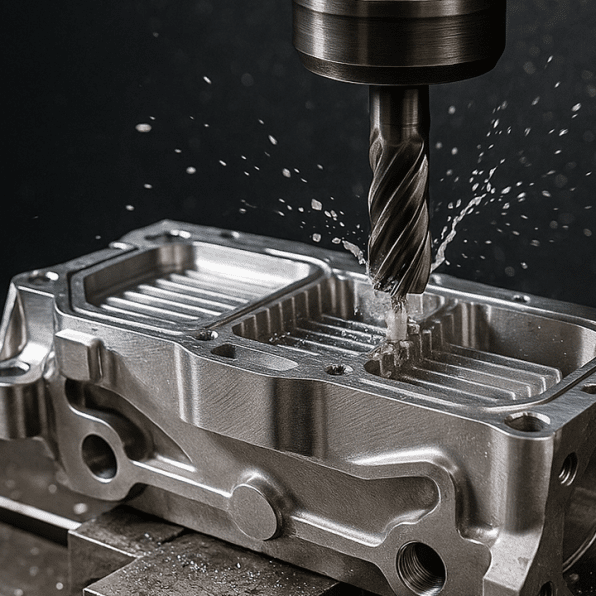
Is Low-Pressure Die Casting a Fit for Your Needs?
Advantages
-
Improved Metal Flow and Porosity
LPDC ensures even metal flow, which reduces turbulence and minimizes trapped air. The result: few porosities and stronger, more reliable castings compared to high-pressure die casting.
-
Better Mechanical Properties
Parts produced under low pressure generally have higher density and fewer internal defects. This improves tensile strength, fatigue resistance and overall durability compared to high-pressure die casting.
-
Dimensional Accuracy
The controlled flow enables precise filling of intricate mold features. This reduces the need for extensive machining or post-processing.
-
Reduced Material Waste
Overflow is minimal because the metal is pushed gradually into the mold. This conserves expensive alloys and keeps scrap rates low.
-
Thin Walls & Complex Shapes
LPDC excels at producing parts with thin sections that are difficult to achieve through gravity casting. Complex geometries can be formed without compromising structural integrity.
Disadvantages
-
High Initial Costs
LPDC requires specialized furnaces, pumps and molds. The initial investment is significantly higher compared to gravity casting or other simpler methods.
-
Slower Production Rate
Filling the mold under low pressure is slower than high-pressure die casting. This can limit production speed, especially for large part orders.
-
Complex Process Control
Operators must precisely control temperature, pressure and timing. Even small deviations can lead to defects such as cold shuts or incomplete filling.
What Industries Are The Best Fit For Low-Pressure Die Casting?
Low-pressure die casting is a match for industries that need components that are strong, light and precise.
Aerospace
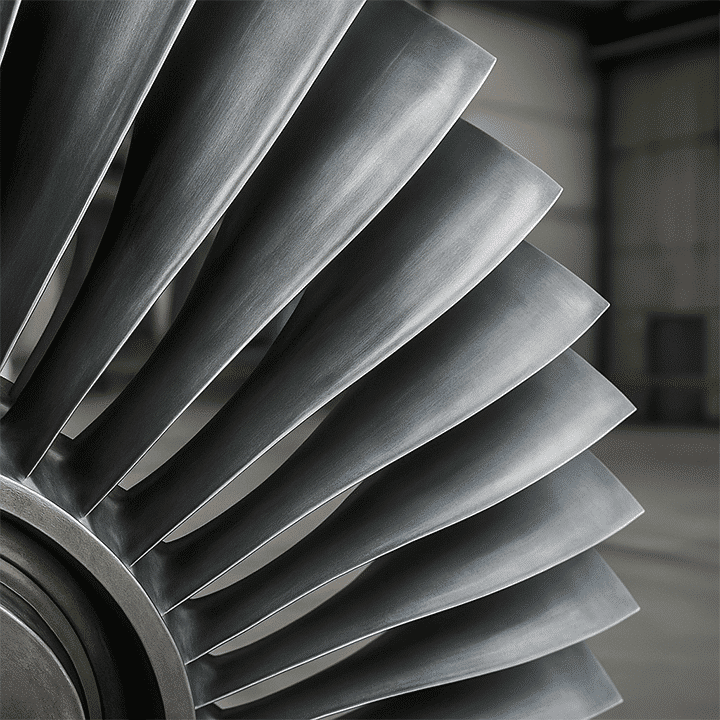
Aerospace manufacturers use LPDC for components such as housings, brackets and engine parts. It ensures superior metallurgical integrity and precision, which are essential for safety-critical and high-temperature aerospace and defense applications.
Automotive
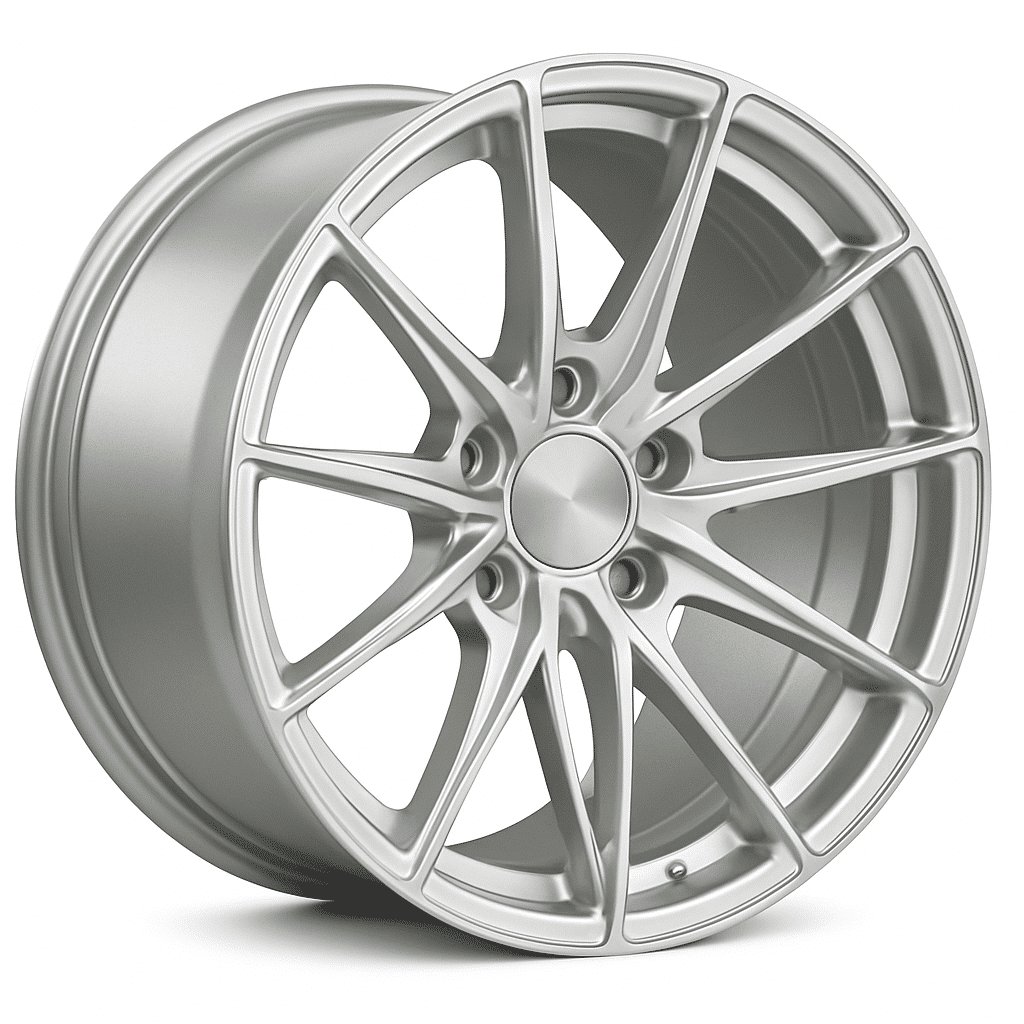
LPDC is widely used to produce lightweight aluminum wheels, suspension components and structural parts. It delivers a high strength-to-weight ratio and excellent dimensional consistency needed for vehicle performance and fuel efficiency.
Industrial Machinery
LPDC components are found in pumps, compressors and heavy-duty machinery housings. It enables durable, defect-free parts that can withstand continuous mechanical and thermal stress.
Energy
The energy industry employs LPDC to create parts for wind turbines, power generation equipment and electric motor housings. Its ability to produce large, complex aluminum components with minimal porosity maximizes efficiency and reliability.
Explore Fathom’s Full Range of Manufacturing Equipment
Download our complete machine list for a detailed look at our capabilities across CNC machining, additive, molding, and fabrication.
Why Choose Fathom for Low Pressure Die Casting
-
Our expert engineers will help you optimize your part designs for production.
-
Our engineering and production teams bring decades of expertise and problem-solving to every project.
-
We offer manufacturing and full post-processing capabilities under one roof for one point of accountability
-
We’re your partner from design and prototyping to bridge and full production.