Skip to content
Aerospace & Defense CNC Machining 20 Nov 2025

5-Axis Machining

Written by

updates@lform.com

How 5-Axis CNC Machining Works
01 Design Preparation

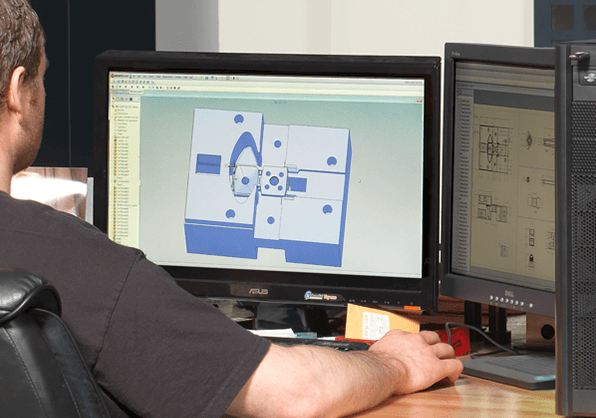
A part is first designed in a CAD file, a 2D or 3D digital model of the part. 5-axis machining adds two rotational axes to the cutting tool and the workpiece, enabling you to design more complex parts. To power a 5-axis machine tool, the CAD design must be converted into toolpaths that tell the cutting head where to move and how much material to remove.

McHenry_Design (1)
02 Machine Setup

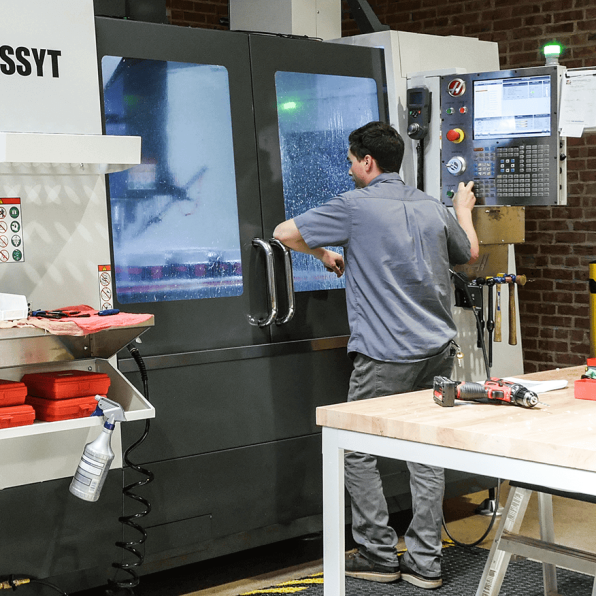
The workpiece is first attached to the machine’s cutting table. Because the 5-axis machine tool can reach more of the surface of the workpiece, the fixturing needed to hold it in place can be simplified. Next, the correct size cutting tools that will be used to form the part are loaded into it. Finally, the G-code to control the job is then transferred to the machine’s control system.

cnc_milling_machine
03 Machining & Post-Processing

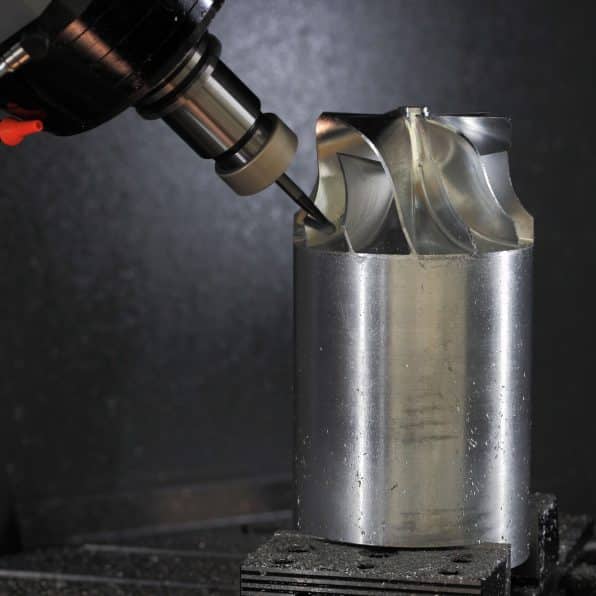
The machine’s spindle moves the rotating cutting tool along the X, Y and Z axes, removing material to shape the part. Coolant may be applied to the cutting area to cool the tool, reduce friction and improve the part’s finish. Because a 3-axis machine can only cut one face of the material at a time, the workpiece may need to be repositioned to machine other sides of it.

Machining & Post-Processing_5Axis

Is 5-Axis Machining Right For Your Project?

Advantages

  • Complex Shapes

    5-axis machining can produce intricate designs with curves and angles that are difficult or impossible on 3-axis machines.

  • Increased Accuracy

    It can machine multiple sides of a part in a single setup, eliminating the need to reposition the workpiece. This reduces errors and leads to higher precision and tighter tolerances.

  • Reduced Setup Time

    By machining multiple faces in a single setup, 5-axis machines significantly cut down on the time and cost associated with multiple setups and fixtures.

  • Improved Production

    The ability to machine more complex parts and use shorter tools with higher feed rates leads to faster production times.

  • Better Surface Finish

    The cutting tool can maintain a more optimal angle with the workpiece, resulting in a smoother, cleaner cut with fewer tool marks.

Disadvantages

  • Operator Skill Level

    Operating these machines requires a higher level of skill, including advanced 3D visualization and a thorough understanding of multi-axis motion to avoid collisions and ensure accuracy.

  • Complex Programming

    Creating accurate and efficient tool paths is more complex and requires sophisticated CAM software and a deep understanding of 5-axis principles.

  • Setup Time

    Setup and programming can take more time compared to simpler 3-axis machines.

  • Accuracy

    Maintaining high position accuracy can be more challenging due to factors like heat generation, mechanical transmission errors, and angular errors in the rotational movements.

5-Axis Machining: For High-Performance, Complex Parts

Aerospace Parts

The exceptional accuracy of 5-axis machines makes them a popular choice for complex aerospace parts like turbine blades and fuselage components.

Medical Applications

5-axis machines are frequently used to produce components that make a real difference in the health and well-being of patients, including prosthetic limbs and dental implants. 

Automotive Components

5-axis machines are used to produce rugged, complex components for engines, transmissions and steering system parts.

Case Studies Block

Why Choose Fathom for 5-Axis Machining?

Share this article: