STEP 3D Printing
-
Get High-Quality Thermoplastic Parts – Fast
-
Excellent Surface Finish Without Post-Processing
-
Ideal for Rapid Prototyping
Trusted by Industry Leaders


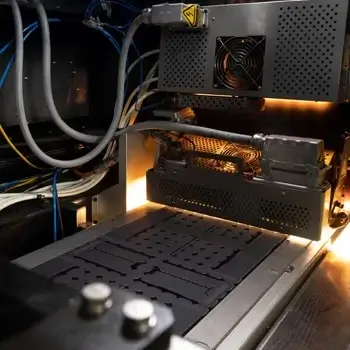
How Does STEP Work
Advantages & Limitations of STEP Technology
Advantages
-
Accelerate New Product Development
Because parts can be produced quickly using the STEP technology without tooling, it can help you bring new products to market faster and expand your company’s competitive edge.
-
Excellent Surface Quality
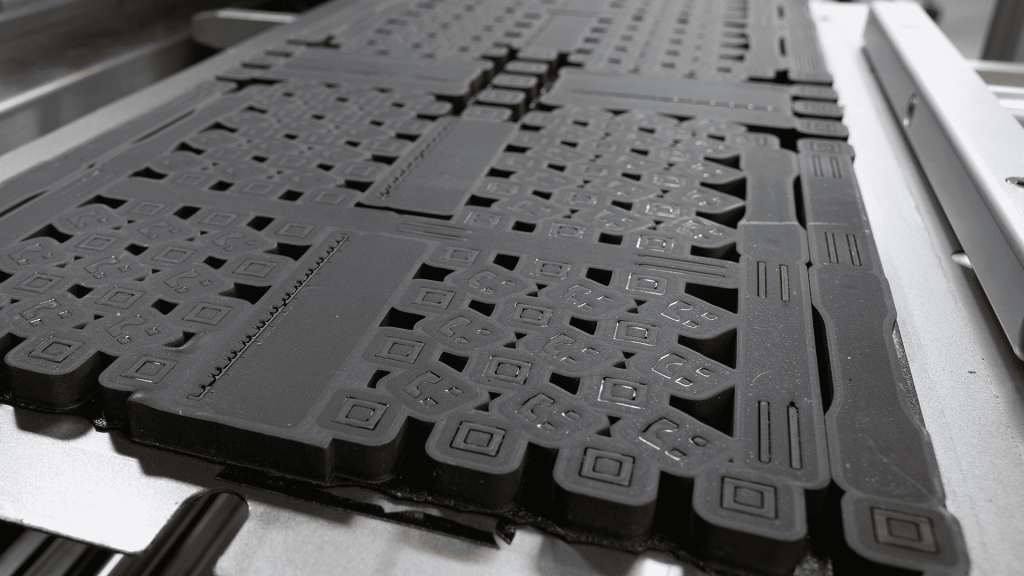
The STEP technology produces parts with a smooth surface finish that doesn’t require post-processing.
-
Flexible Post-Processing
If it is required, parts produced using the STEP technology can be post-processed the same as any thermoplastic parts.
-
Fine Features
The STEP technology enables you to print part designs with fine features, small holes and complex geometries. It can accommodate thin walls without warping, which is sometimes a problem for other additive technologies.
-
Tight Tolerances
The STEP technology can achieve tolerances that are comparable to CNC machining – tighter than additive technologies or injection molding.
-
All of the Toughness of Thermoplastics
Parts produced using the STEP technology have good dimensional stability for use in hot, humid environments. They also have excellent chemical resistance to acids, bases, water and alcohol (commonly found in hand sanitizers), just like injection-molded thermoplastics.
-
Produce Production Parts with the Same Materials as Prototypes
STEP enables customers to go from prototype to production parts quickly and easily.
-
Minimal Design Restrictions
Many additive technologies require designers to convert thick wall designs to lattices to reduce print time and material use. STEP has no such restriction. It prints and deposits layers every 6 seconds, regardless of their complexity. STEP can handle sharp corners, thin-to-thick wall transitions and no draft – design features that tend to be problematic for injection molded parts.
Disadvantages
-
Support Removal
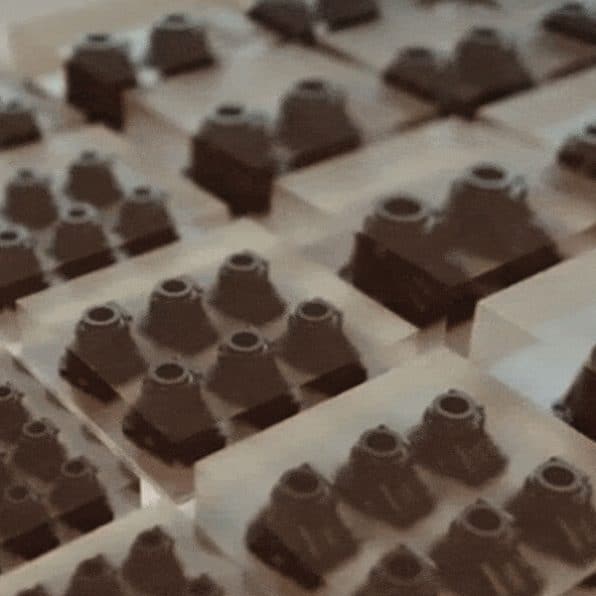
When printing is complete, parts are completely encased in a soluble support material. It’s easily cleaned from open surfaces, but it may be hard to remove from cavities, blind holes and trapped areas.
-
Build Size
The maximum build envelope for parts produced using the STEP technology is currently 24 x 12 x 4 inches, not as large as some other additive technologies. Evolve is working on expanding the build size.
-
Limited Materials
The STEP technology currently only produces parts from ABS. A high-performance grade of Nylon will be offered soon.
Applications of STEP Technology
Healthcare: STEP enables you to produce complex healthcare parts and products, with high new technology content or un-moldeable features at scale. STEP technology also offers opportunities for product customization with a high level of agility.
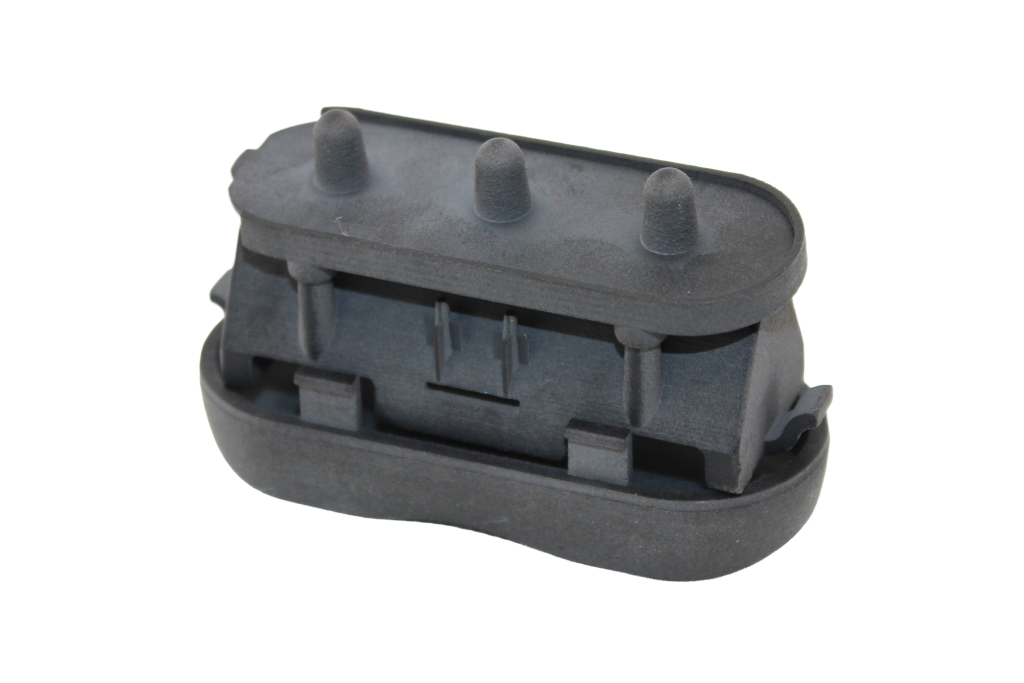
Automotive: Dimensional and form accuracy mean STEP parts can be integrated seamlessly into larger assemblies, replacing injection-molded parts. The ultra-smooth surface of STEP parts (3-6 um Ra) and zero porosity makes it possible to use them in a variety of applications. STEP parts can be painted, metalized or coated in the same way as injection-molded parts.
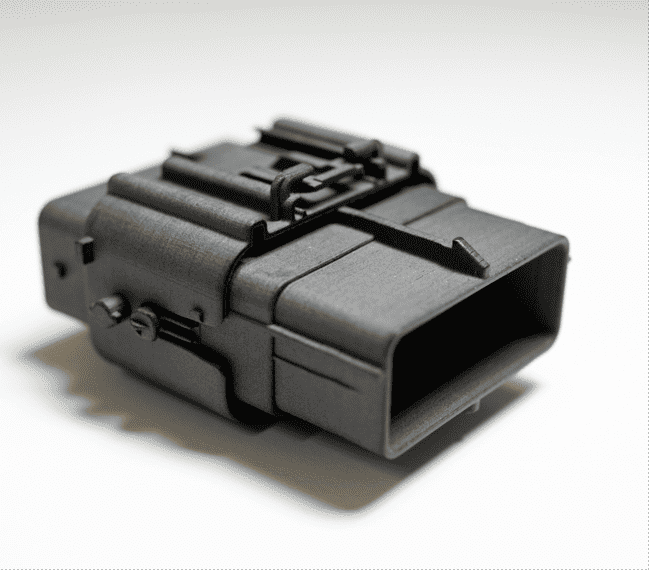
Electronics: The mechanical strength and toughness of STEP parts, along with their excellent surface finish, make them a strong contender to replace injection molded parts in consumer electronics. It’s especially well-suited to high-value, low-volume parts where injection molding would be impractical.
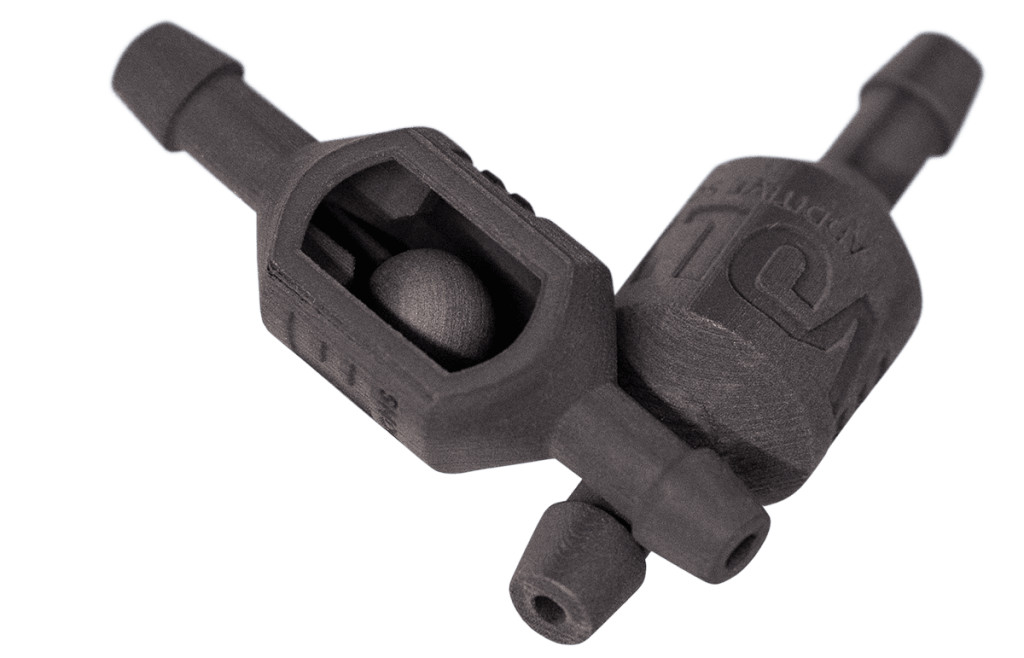
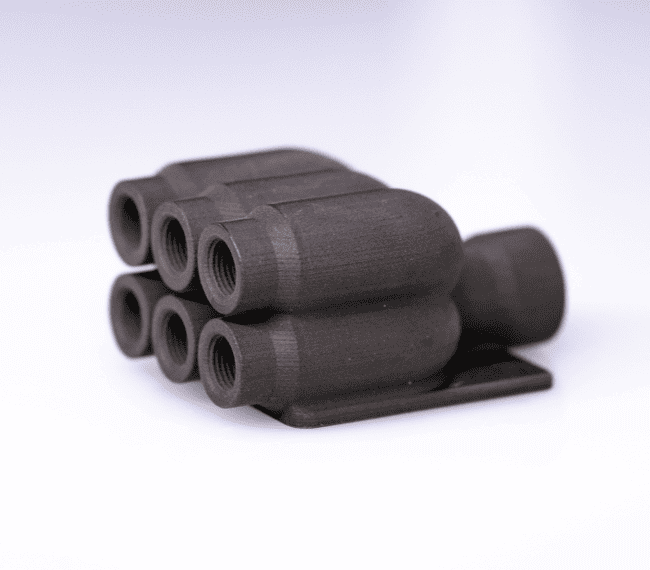
Fluid Management: For irrigation and other water systems, STEP can be used to produce water-tight screw threads and fluid control features. Its excellent dimensional accuracy delivers tolerances required for complex assemblies. Applications include internal manifolds, accumulators, retained ball valves and deep channels.
Design with Confidence Using STEP Materials
Explore material characteristics, mechanical behavior, and use-case guidance for the STEP platform. Ideal for engineers who need production-grade accuracy in fast-moving programs.
What Can STEP be Paired With?
Like any thermoplastic parts, parts produced using the STEP technology can be attached or bonded to other components. Inserts can be added to parts after they are processed.
Because parts can be produced so quickly using STEP technology, it is suitable for both prototype and production applications. Utilizing the same process for rapid prototyping and production can help you speed your new product launches.
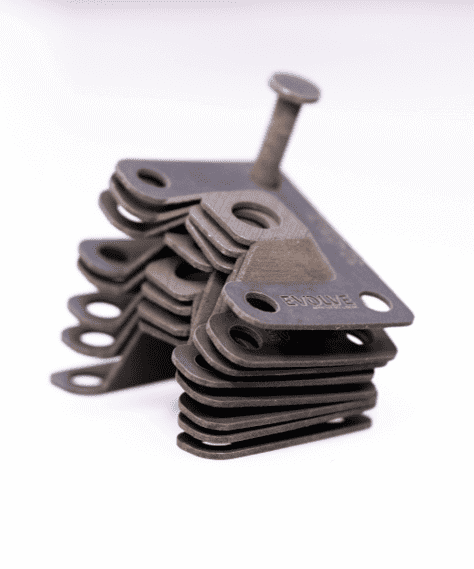
Traditional Technologies That Can Benefit from STEP
Any engineer who’s currently using ABS, nylon or other thermoplastics for their products and new product development should investigate the STEP technology. It can help you bring your products to market faster and achieve designs that aren’t possible with injection molding and other additive technologies.
Case Studies
Optimize Your Parts for STEP Production
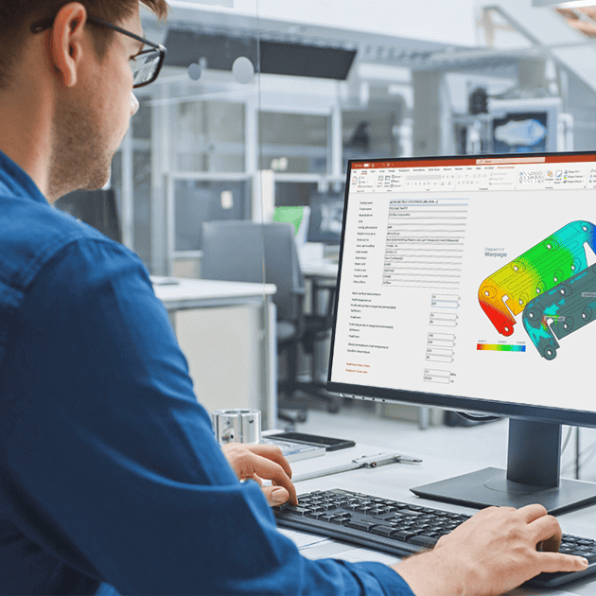
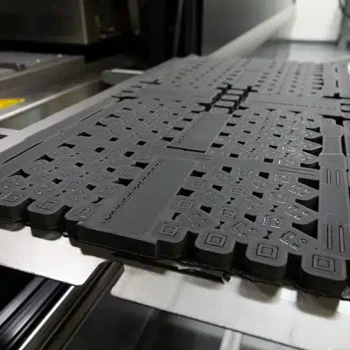
Get detailed guidance on feature design, tolerances, and geometry considerations specific to STEP. Ideal for teams looking to harness STEP’s speed and production-grade repeatability.
Why Choose Fathom for STEP 3D Printing?
-
Fathom is currently the ONLY service bureau that offers STEP technology, and has the expertise to help you meet your needs faster.
-
Fathom has the capacity and knowledge to help you produce high-quality STEP parts to meet your prototyping and production needs.
-
An experienced engineer will help you first determine if STEP is the right solution for your needs and will then help you optimize your part design for the best results.