PolyJet 3D Printing
-
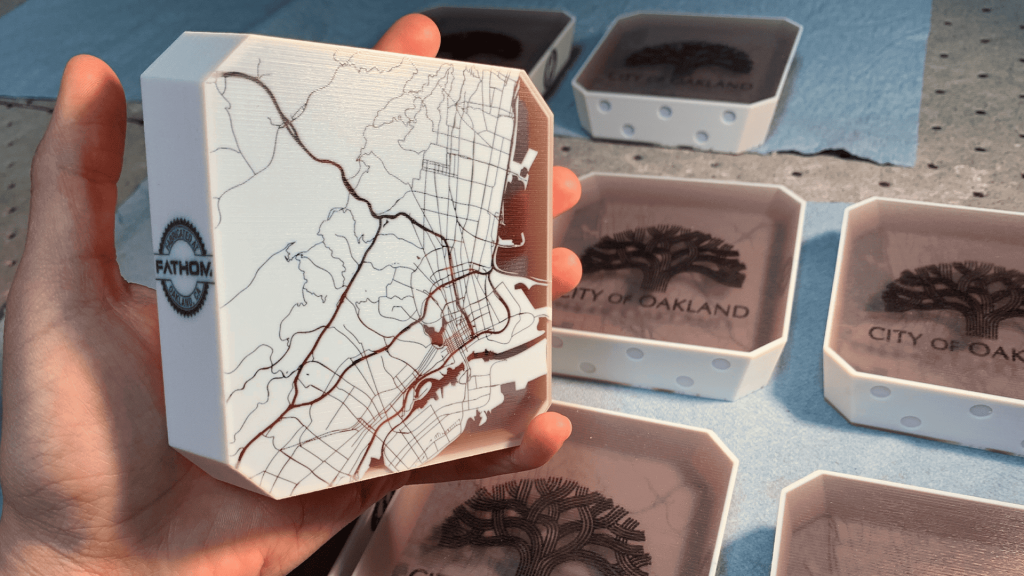
Build Colorful & Detailed Demonstration Models Quickly
-
Fast Prototype Parts with Fine Detail & Smooth Surface Finish
-
Blend Multiple Materials & Durometers in a Single Part
Trusted by Industry Leaders


How Does PolyJet 3D Printing Work?
What Are the Advantages & Limitations of PolyJet 3D Printing?
Advantages
-
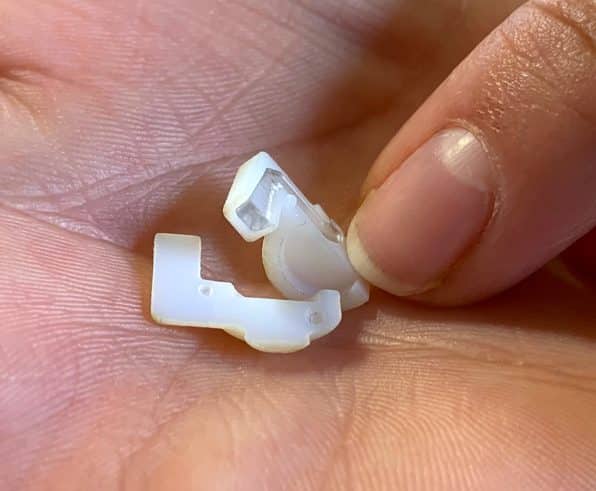
Versatile & Fast
From prototypes and colorful models to end-use parts, Fathom’s PolyJet printing service does it all. It can print them quickly, giving you more time to design, test and perfect your designs.
-
Excellent Level of Detail
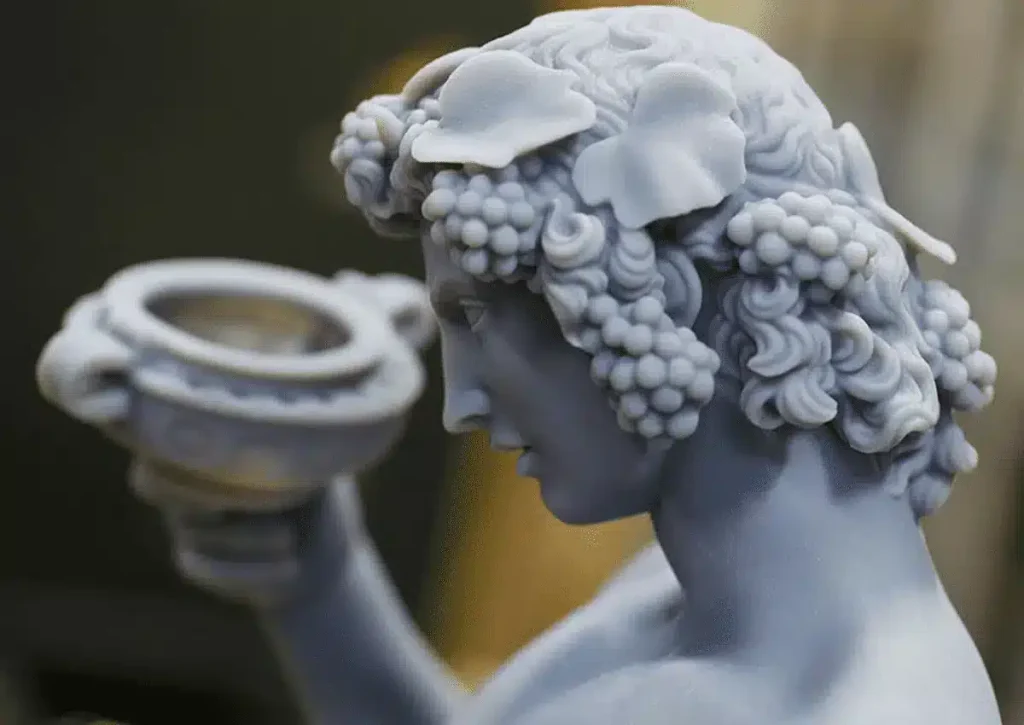
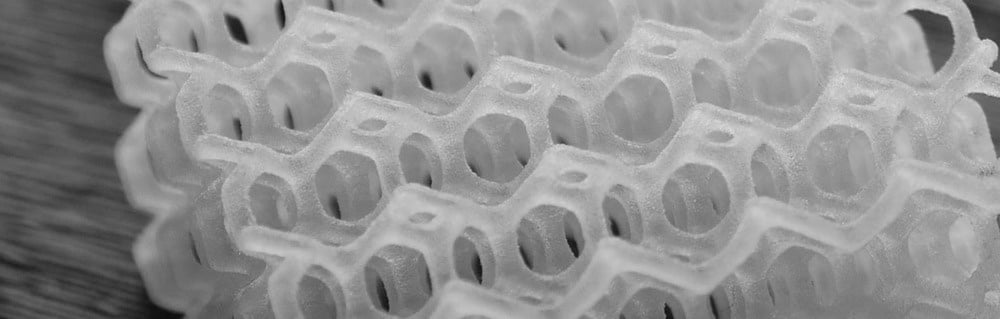
PolyJet can print layers as thin as 16 microns. That means parts produced using it can contain an extraordinary amount of detail and an excellent surface finish.
-
Support for Digital Materials
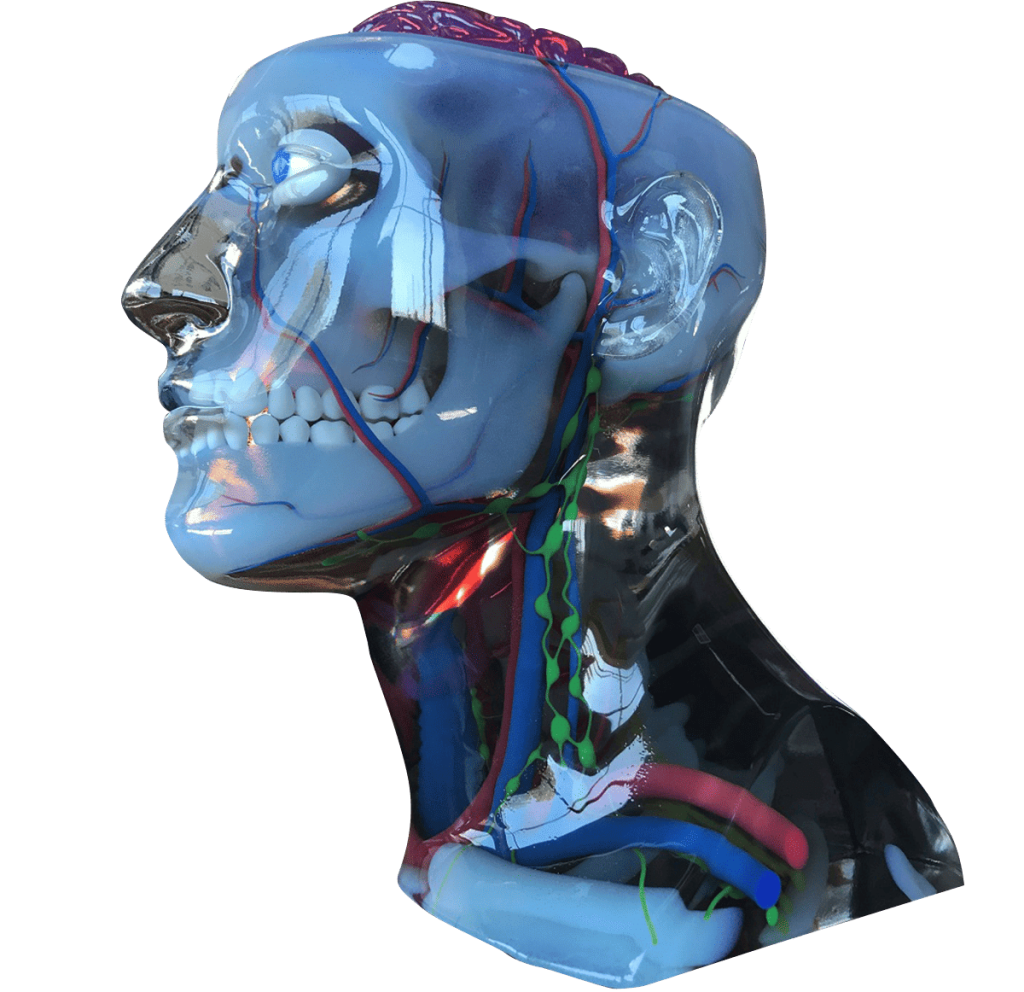
PolyJet printers can mix up to six resins, which gives designers, engineers and your industrial 3D printing service unprecedented creative opportunities to fine-tune their part designs and material characteristics.
-
Transparent Options
PolyJet can print transparent materials that enable the production of transparent and translucent parts.
-
Fast Removal of Support Material
The gel-like support material used by PolyJet is water soluble. It can be dissolved using a water jet. This eliminates the need for time-consuming post-production processes and results in a smoother part finish than some other 3D printing processes.
-
Strong Parts
PolyJet can produce sturdy parts that have good tensile strength.
Disadvantages
-
Cost
The materials required for PolyJet printers tend to be more expensive than those for many other types of 3D printing.
-
Part Size Limitations
PolyJet isn’t suitable for printing larger parts.
-
Support Structure
Even though PolyJet uses a gel-like support structure, adding it contributes to longer total part printing times.
-
Not for Long-term Use
Exposure to heat, sunlight and humidity can cause photopolymers to lose some strength and durability.
Applications of PolyJet 3D Printing
-
- Rapid & Functional Prototypes: Create smooth, detailed prototypes with ultra-fine details and surface textures that simulate the aesthetics of your product.
- Visual Aids & Models for Presentation: Because PolyJet 3D printing can combine different materials, colors and transparencies, it’s a favorite technology for creating detailed, realistic medical and dental models.
- Complex Parts with Precise Dimensions: PolyJet has a minimum layer thickness of 16 microns. Its ability to capture tiny details with a high degree of dimensional accuracy is like nothing you’ve seen before in the world of additive manufacturing.
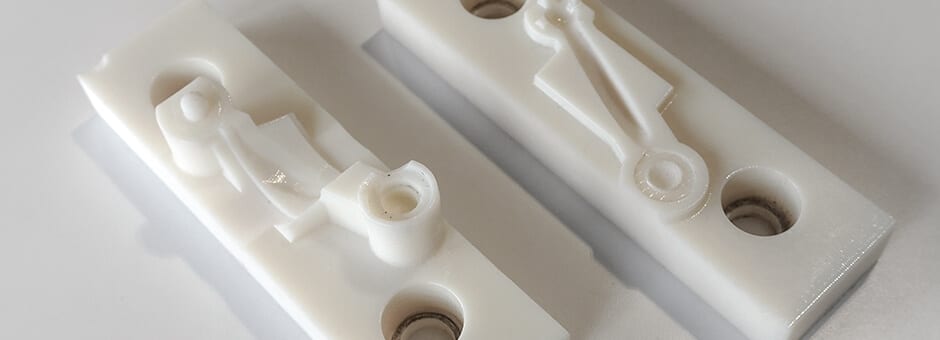
- Manufacturing Tools: PolyJet isn’t just for printing pretty models. It can also be used to build molds, jigs and fixtures where dimensional accuracy is a key requirement.
- Flexible Parts That Simulate Traditional Elastomers: PolyJet 3D printing service is perfect for printing gaskets, seals and housings – where elastomer-like characteristics are a must.
Industries where PolyJet parts are used include medical, dental and consumer products.
PolyJet Materials Available
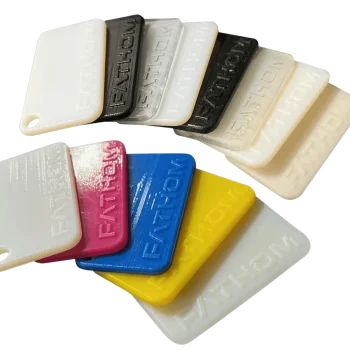
PolyJet 3D printing uses photopolymers that can simulate different material properties ranging from rubber to rigid and transparent to opaque. Download our materials list to learn more.
What Can PolyJet be Paired With?
PolyJet is a unique technology in the additive manufacturing space. It’s unmatched in its ability to produce fast, colorful prototypes. Because it’s a photopolymer, it tends to deteriorate over time. That limits its ability to be paired with other technologies.
PolyJet is sometimes used to create work holding fixtures where precise positioning of a product being manufactured is a must. Over time, these fixtures will deteriorate. But a manufacturing engineer can easily print a new one to replace it.
PolyJet parts can be post-machined to meet specific tolerances. They can also be bonded to other assemblies, such as fiberglass panels.
Traditional Technologies That Can Benefit from PolyJet
Many types of visual aids and models are now made by hand using clay, screen printing, labels and other time-consuming and often expensive manual techniques. These models can be produced much faster using PolyJet 3D printing. Inks are available in thousands of colors and can be controlled at the voxel level. It can also print a variety of surface textures. That means you can create sophisticated prototypes that exactly match the look and feel of your brand.
Prototype parts are made using a variety of techniques. Having a tool built to produce a handful of prototype injection molded parts could take weeks. CNC machining prototype parts requires time-consuming machine and work holding tool setups and a skilled operator. In contrast, Fathom’s PolyJet printing service can be used to print prototype parts in a matter of hours.
Case Studies

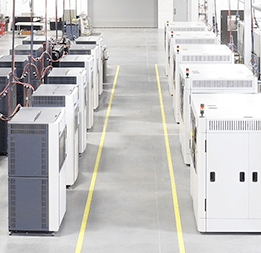
Explore Fathom’s Full Range of Manufacturing Equipment
Download our complete machine list for a detailed look at our capabilities across CNC machining, additive, molding, and fabrication.
Why Choose Fathom for PolyJet 3D Printing?
-
Fathom has the expertise and technology to help you meet your needs faster.
-
Fathom has the capacity to print your parts quickly.
-
We also offer full post-processing capabilities under one roof.